Guía de espaciado de plantas en otoño para camas elevadas y surcos
Maximiza tu cosecha con nuestra guía de distribución de cultivos. Aprende la distancia ideal para camas elevadas y surcos.

Ingeniero Civil y Estimador
Resumen de Ingeniería y Respuesta Rápida
En bancales elevados con el método de pie cuadrado: Brócoli y Col (1 por pie² / 12" distancia), Col Rizada y Acelga (1 por pie²), Lechuga de cabeza (4 por pie² / 6" distancia), Espinaca (9 por pie² / 4" distancia), y Zanahorias (16 por pie² / 3" distancia).
Puntos Clave del Proyecto:
- ✓Patrón triangular escalonado: Aumenta la densidad de cosecha un 15.4% frente a la cuadrícula tradicional.
- ✓Rendimiento en bancal 4x8: Permite cultivar hasta 148 plantas productivas simultáneas.
- ✓Resistencia a heladas: Las brassicas y raíces toleran temperaturas de hasta 25°F–28°F y mejoran su dulzor.
📑 Índice de Contenidos
- ▸Matriz maestra de distribución para cultivos de estación fría
- ▸Cuadrícula cuadrada vs. espaciado triangular alternado: ¿Cuál rinde más?
- ▸Por qué importa el espaciado de plantas en otoño: camas elevadas vs. surcos en el suelo
- ▸Asociaciones de cultivos para la temporada de otoño
- ▸Riesgos biológicos del hacinamiento de vegetales
- ▸Cómo calcular el total de plántulas para una cama elevada estándar de 4’ × 8’
- ▸Preguntas frecuentes
- ▸Calcula tu cuadrícula de cultivo al instante
Respuesta rápida de AEO: Para obtener el máximo rendimiento en camas de cultivo elevadas, distribuya los cultivos de clima frío de la siguiente manera: lechuga de cabeza (6 a 8 pulgadas de distancia; 4 por pie cuadrado), brócoli, repollo y coliflor (12 a 15 pulgadas de distancia; 1 por pie cuadrado), kale y acelga (12 pulgadas de distancia; 1 por pie cuadrado), espinaca y lechuga de hoja (4 a 6 pulgadas de distancia; 9 por pie cuadrado), y zanahorias y rábanos (2 a 3 pulgadas de distancia; 16 por pie cuadrado). Para surcos de cultivo en el suelo, deje de 18 a 36 pulgadas entre surcos para permitir el paso y el flujo de aire.
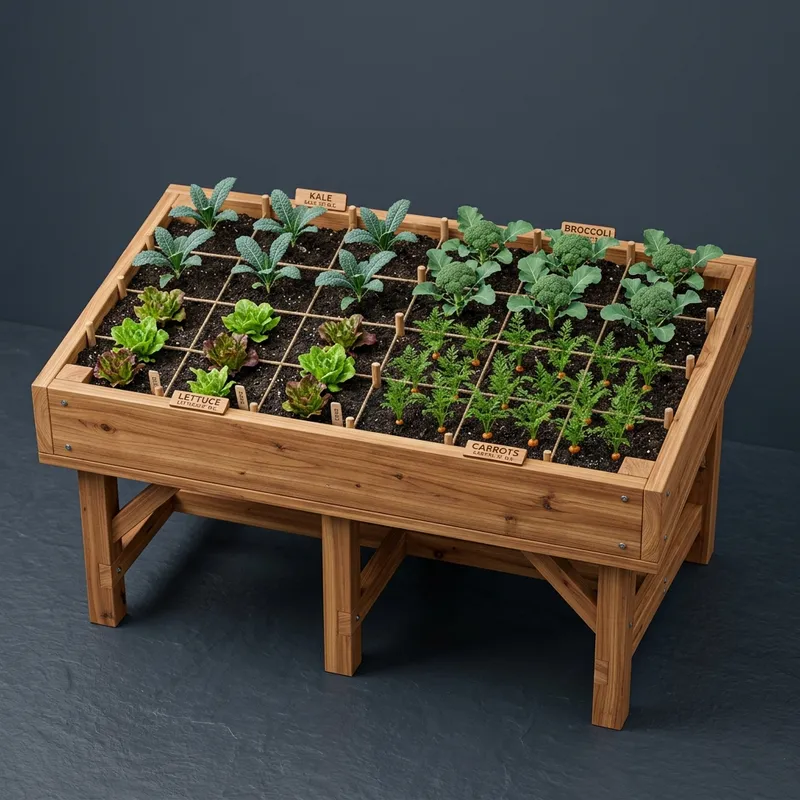
A medida que el calor abrasador de mediados de verano disminuye, el final del verano y el otoño ofrecen una de las temporadas de cultivo más productivas y resistentes a las enfermedades para los horticultores domésticos y productores comerciales. Los vegetales de estación fría (brassicas, hojas verdes, aliáceas y cultivos de raíces) prosperan en temperaturas diurnas moderadas (13 °C a 21 °C / 55 °F–70 °F) y convierten los almidones en azúcares naturales después de las heladas ligeras, produciendo un sabor superior y una textura crujiente. Sin embargo, dominar el espaciado de plantas en otoño es el factor más crítico para evitar el fracaso de los cultivos, ya que los ángulos de sol más bajos y el aumento de la humedad propios de esta estación requieren una planificación precisa del diseño para evitar la pudrición y maximizar la exposición solar.
La distribución inadecuada es la causa principal del fracaso de los huertos otoñales. El hacinamiento bloquea la luz solar de ángulo bajo del otoño, restringe la circulación del aire, fomenta el devastador mildiu polvoriento y los hongos del marchitamiento fúngico (damping-off), y priva a los sistemas radiculares de los nutrientes cruciales del suelo.
Para ayudarte a planificar tu huerto, esta matriz maestra de distribución de cultivos otoñales detalla las configuraciones ideales para camas elevadas y surcos tradicionales, comparando cuadrículas cuadradas, patrones triangulares alternados y diseños de cultivos asociados.
Matriz maestra de distribución para cultivos de estación fría
| Cultivo | Espaciado en cuadrícula de cama elevada (Método del pie cuadrado) | Espaciado triangular alternado (Entre plantas) | Espaciado en surcos en el suelo (Pulgadas entre plantas) | Distancia de surcos en el suelo (Pulgadas entre surcos) | Profundidad mínima de suelo requerida |
|---|---|---|---|---|---|
| Brócoli | 1 por pie cuadrado (cuadrícula de 12“) | 14 pulgadas | 18 a 24 pulgadas | 24 a 36 pulgadas | 12 pulgadas |
| Repollo (de cabeza) | 1 por pie cuadrado (cuadrícula de 12“) | 14 pulgadas | 15 a 18 pulgadas | 24 a 30 pulgadas | 12 pulgadas |
| Coliflor | 1 por pie cuadrado (cuadrícula de 12“) | 14 pulgadas | 18 a 24 pulgadas | 24 a 30 pulgadas | 12 pulgadas |
| Kale (Lacinato / Rizado) | 1 por pie cuadrado (cuadrícula de 12“) | 12 pulgadas | 12 a 18 pulgadas | 18 a 24 pulgadas | 8 a 10 pulgadas |
| Acelga | 2 a 4 por pie cuadrado (cuadrícula de 6–8“) | 8 pulgadas | 8 a 12 pulgadas | 18 pulgadas | 8 a 10 pulgadas |
| Lechuga de cabeza (Romana/Mantecosa) | 4 por pie cuadrado (cuadrícula de 6“) | 7 pulgadas | 8 a 10 pulgadas | 12 a 18 pulgadas | 6 a 8 pulgadas |
| Lechuga de hoja / Rúcula | 9 por pie cuadrado (cuadrícula de 4“) | 4.5 pulgadas | 4 a 6 pulgadas | 10 a 12 pulgadas | 6 pulgadas |
| Espinaca | 9 por pie cuadrado (cuadrícula de 4“) | 4.5 pulgadas | 4 a 6 pulgadas | 10 a 12 pulgadas | 6 a 8 pulgadas |
| Zanahorias y chirivías | 16 por pie cuadrado (cuadrícula de 3“) | 3 pulgadas | 2 a 3 pulgadas | 12 a 15 pulgadas | 12 a 16 pulgadas |
| Rábanos | 16 por pie cuadrado (cuadrícula de 3“) | 3 pulgadas | 2 pulgadas | 8 a 10 pulgadas | 4 a 6 pulgadas |
| Remolachas y nabos | 9 por pie cuadrado (cuadrícula de 4“) | 4.5 pulgadas | 3 a 4 pulgadas | 12 a 15 pulgadas | 8 a 10 pulgadas |
| Ajo y chalotas (Plantados en otoño) | 9 por pie cuadrado (cuadrícula de 4“) | 4.5 pulgadas | 4 a 6 pulgadas | 12 pulgadas | 8 pulgadas |
| Ejotes / Judías de mata baja (Tardíos) | 4 a 9 por pie cuadrado | 5 pulgadas | 4 a 6 pulgadas | 18 a 24 pulgadas | 8 a 10 pulgadas |
Cuadrícula cuadrada vs. espaciado triangular alternado: ¿Cuál rinde más?
Al diseñar una cama de cultivo elevada, existen dos patrones geométricos principales de distribución:
1. Patrón de cuadrícula cuadrada (Jardinería estándar de pies cuadrados)
Las plantas se organizan en filas y columnas perfectas (12“ × 12“, 6“ × 6“ o 4“ × 4“).
- Pros: Fácil de diseñar usando cuerdas o listones de madera; simple de medir y plantar.
- Contras: Deja pequeños espacios de suelo desnudo y expuesto entre las esquinas diagonales.
2. Patrón triangular / hexagonal alternado
Cada fila alterna se desplaza por la mitad de la distancia de espaciado, formando triángulos equiláteros entre plantas adyacentes.
- Ventaja de ingeniería: Incrementa la densidad de plantas hasta en un 15.4% por pie cuadrado manteniendo la misma distancia de espaciado radicular.
- Cierre del dosel: Las hojas se superponen de manera uniforme para formar un mantillo verde vivo que bloquea la luz solar para las semillas de malezas y protege el suelo de la pérdida de humedad.
Fórmula de densidad hexagonal equilátera:
Cantidad de plantas = Área de la cama (pies cuadrados) ÷ [(Espaciado en pulgadas × 0.0833)² × 0.866]
Por qué importa el espaciado de plantas en otoño: camas elevadas vs. surcos en el suelo
¿Por qué las camas elevadas permiten una densidad de plantas de 2 a 4 veces mayor que los huertos tradicionales en el suelo?
+—————————————————————+ | Surcos de cultivo en el suelo: | | █ Planta █ <— Sendero de 36“ (Suelo compactado por pisadas) —> | | █ Planta █ <— Malezas altas en pasillos / Capa delgada de tierra —>| +—————————————————————+ | Cama elevada intensiva: | | █ Planta █ █ Planta █ █ Planta █ █ Planta █ | | <— Zona radicular 100% sin compactar / Tierra vegetal y compost de 12“ —>| +—————————————————————+
- Cero compactación por tránsito peatonal: En las camas elevadas, todas las tareas de deshierbe, cosecha y riego se realizan desde fuera de los bordes de madera. El suelo permanece ultra poroso y aireado, lo que permite que las raíces crezcan profundamente de forma vertical en lugar de extenderse horizontalmente.
- Mezclas de suelo diseñadas: Las camas elevadas se rellenan con mezclas de alta calidad compuestas por un 50% de tierra vegetal cribada, 30% de compost rico y 20% de perlita o turba, lo que proporciona una densidad de nutrientes hasta 5 veces mayor que la arcilla o la arena nativas.
Asociaciones de cultivos para la temporada de otoño
Interplantar estratégicamente vegetales compatibles mejora la biología del suelo, confunde a las plagas de insectos y maximiza el espacio vertical de varios niveles:
Combinaciones exitosas para el otoño:
- Brócoli + Lechuga de cabeza: Planta lechuga de crecimiento rápido entre las plántulas jóvenes de brócoli. La lechuga se cosecha en 40 días, justo cuando el brócoli crece lo suficiente como para dar sombra al suelo.
- Zanahorias + Rábanos: Mezcla semillas de zanahoria y rábano en los mismos surcos. Los rábanos de germinación rápida (cosecha a los 21 días) rompen la costra dura del suelo para las zanahorias de crecimiento lento (cosecha a los 75 días), aclarando la fila de forma natural.
- Repollo + Aliáceas (Cebollas/Ajo): Los fuertes aceites de azufre del ajo y las cebollas verdes repelen a las polillas del gusano del repollo y a los pulgones.
- Kale + Cilantro: Las flores de cilantro atraen a avispas parásitas benéficas que se alimentan de las orugas de las brassicas.
Riesgos biológicos del hacinamiento de vegetales
Resiste la tentación de amontonar plántulas adicionales en un espacio limitado. No respetar el espaciado de plantas en otoño adecuado desencadena tres modos principales de fallo:
- Mildiu polvoriento y botritis: A medida que las noches de otoño se enfrían y la humedad aumenta, el aire húmedo atrapado en los racimos densos de hojas provoca brotes de hongos que pueden destruir camas enteras en cuestión de días.
- Formación de botones en brassicas (Buttoning): Cuando las raíces de brócoli, coliflor o repollo experimentan el estrés del hacinamiento físico, producen pequeños “botones” no comestibles de 1 pulgada en lugar de cabezas de mercado completas y pesadas.
- Estancamiento de raíces fibrosas: Los vegetales de raíz hacinados (zanahorias, remolachas, rábanos) se entrelazan y producen raíces retorcidas, leñosas y en miniatura.
Cómo calcular el total de plántulas para una cama elevada estándar de 4’ × 8’
Una cama de cultivo elevada estándar de 4 ft × 8 ft tiene 32 pies cuadrados de espacio de cultivo útil. Aquí tienes un diseño optimizado de alto rendimiento para el otoño:
- Sección A (8 pies cuadrados): 8 plantas de brócoli / coliflor (1 por pie cuadrado)
- Sección B (8 pies cuadrados): 8 plantas de kale toscano lacinato (1 por pie cuadrado)
- Sección C (8 pies cuadrados): 32 cabezas de lechuga romana y mantecosa (4 por pie cuadrado)
- Sección D (4 pies cuadrados): 36 plantas de espinaca (9 por pie cuadrado)
- Sección E (4 pies cuadrados): 64 zanahorias de otoño (16 por pie cuadrado)
- Rendimiento total de la cosecha: ¡148 plantas de vegetales productivas en una sola cama de 4×8!
Preguntas frecuentes
¿Cuál es el momento ideal para sembrar vegetales de otoño?
Comienza a sembrar en interiores a mediados de julio o principios de agosto (o siembra directamente al aire libre de 6 a 8 semanas antes de la fecha promedio de la primera helada de otoño en tu localidad). Esto permite que las plantas desarrollen sistemas radiculares robustos antes de que las horas de luz solar diaria disminuyan a finales del otoño.
¿Qué profundidad debe tener el suelo en una cama elevada para vegetales de otoño?
Se recomienda una profundidad mínima de 8 a 12 pulgadas para hojas verdes y brassicas. Si cultivas vegetales de raíz pivotante profunda como las zanahorias Danvers o las chirivías, apunta a 12 a 16 pulgadas de una mezcla suelta y libre de piedras de tierra vegetal y compost.
¿Pueden los vegetales de otoño sobrevivir a las heladas ligeras del invierno?
Sí. Las brassicas (kale, col rizada, coles de Bruselas) y los cultivos de raíces (zanahorias, chirivías, nabos) toleran fácilmente temperaturas de hasta -4 °C a -2 °C (25 °F–28 °F). Las temperaturas de congelación estimulan a la planta a convertir los almidones en azúcares de glucosa protectores, lo que las hace notablemente más dulces después de una helada.
Calcula tu cuadrícula de cultivo al instante
Planifica el diseño de tu huerto de temporada con cero errores de cálculo. Utiliza nuestra Calculadora de espaciado de plantas interactiva y gratuita para seleccionar tus variedades de vegetales, ingresar las dimensiones de tu cama y generar totales exactos de plantas y cuadrículas de pies cuadrados. Explora también nuestra Calculadora de tierra vegetal y Calculadora de compost.
¿Listo para Calcular tu Proyecto?
Ingresa las dimensiones exactas en nuestra calculadora verificada para obtener yardas cúbicas, toneladas y sacos.
Abrir Calculadora de Materiales →Más Guías de Paisajismo
Ver Todas las Guías →¿Cuántos sacos de tierra vegetal para cama elevada de 4x4 necesitas? (Guía de cálculo)
Calcula con precisión cuántos sacos de tierra vegetal necesitas para tu huerto elevado de 4x4. Tablas de profundidad, volumen y mezclas de expertos.
Acolchado vs compost: diferencias clave, cuándo usar cada uno y guía de capas
Descubra las diferencias críticas entre acolchado y compost. Aprenda a utilizar ambos para nutrir el suelo, eliminar malas hierbas y optimizar sus lechos de jardín.
Dimensiones de bloques de hormigón estándar, pesos y cantidades por palé
Guía de ingeniería civil sobre las dimensiones de bloques de hormigón estándar (CMU), pesos reales, normas ASTM y cálculo de materiales para construcción.