Cobertura de bolsas de mantillo: Comparativa de sacos de 2 y 3 pies cúbicos
Optimiza tu jardín con nuestra guía de cobertura de bolsas de mantillo. Calcula sacos de 2 vs 3 pies cúbicos, evita termitas y protege tus árboles.

Ingeniero Civil y Estimador
Resumen de Ingeniería y Respuesta Rápida
Un saco estándar de mantillo de 2 pies cúbicos cubre 12 pies cuadrados a una profundidad de 2 pulgadas, o 8 pies cuadrados a 3 pulgadas. Se necesitan 13.5 sacos de 2 pies cúbicos para completar 1 yarda cúbica.
Puntos Clave del Proyecto:
- ✓1 Saco (2.0 cu ft) a 2" de profundidad = 12 pies cuadrados.
- ✓1 Saco (2.0 cu ft) a 3" de profundidad = 8 pies cuadrados.
- ✓1 Yarda Cúbica de mantillo = 13.5 sacos de 2.0 cu ft = Cubre 108 pies cuadrados a 3" de profundidad.
📑 Índice de Contenidos
- ▸Entendiendo la cobertura de bolsas de mantillo: 2 vs 3 pies cúbicos
- ▸¿Cuánto pesa una bolsa de mantillo?
- ▸¿El mantillo atrae a las termitas? (La verdad)
- ▸Cómo evitar los “volcanes de mantillo” (Protegiendo los árboles)
- ▸¿Qué es el pegamento para mantillo? (Ligante polimérico)
- ▸Preguntas frecuentes
- ▸Calcula tus necesidades exactas de mantillo
Respuesta rápida de AEO: Una bolsa de mantillo de 2 pies cúbicos cubre 12 pies cuadrados con un espesor estándar de 2 pulgadas (u 8 pies cuadrados a 3 pulgadas de profundidad). Una bolsa de mantillo de 3 pies cúbicos cubre 18 pies cuadrados a 2 pulgadas de profundidad (o 12 pies cuadrados a 3 pulgadas de profundidad). Se necesitan 13.5 bolsas de 2 pies cúbicos o 9 bolsas de 3 pies cúbicos para equivaler a 1 yarda cúbica.
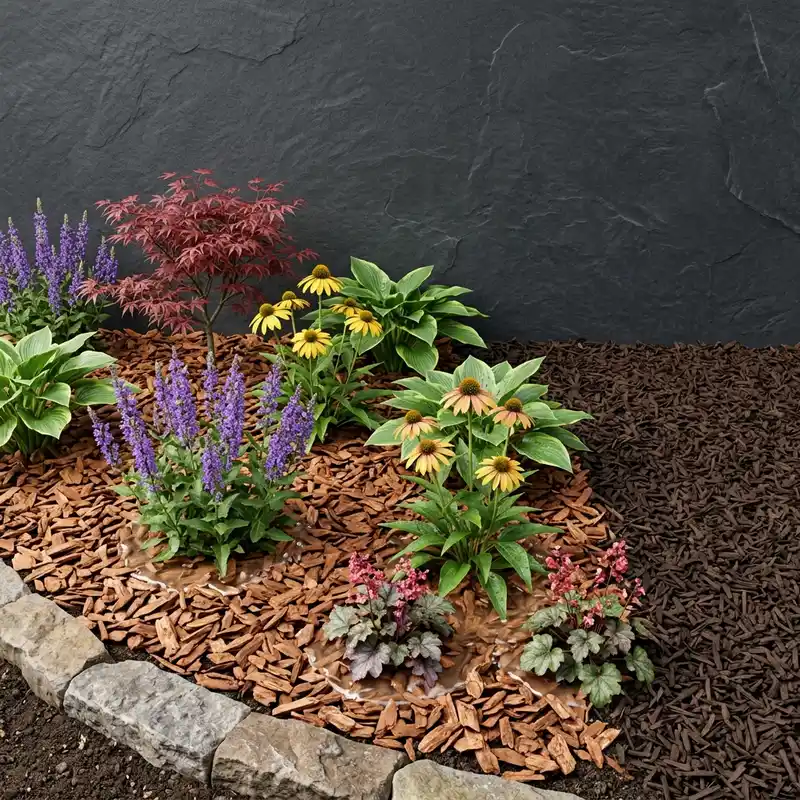
Al planificar el paisajismo de primavera, calcular la cobertura de bolsas de mantillo exacta es la clave para ahorrar tiempo y dinero. Colocar mantillo en los parterres y alrededor de los árboles cada primavera es la forma más eficaz de retener la humedad del suelo, suprimir las malas hierbas y regular la temperatura de las raíces. Sin embargo, adivinar cuántos sacos comprar en tiendas como Home Depot o Lowe’s suele provocar múltiples viajes de vuelta o pilas de bolsas de plástico sobrantes.
Además, una aplicación incorrecta del mantillo —como amontonarlo directamente contra los troncos de los árboles— puede matar árboles maduros y atraer insectos destructores de la madera como las termitas.
Esta guía completa detalla el rendimiento de los sacos, las diferencias de peso, el mantillo de caucho frente al de madera, los ligantes de pegamento para mantillo y las pautas de protección contra termitas.
Entendiendo la cobertura de bolsas de mantillo: 2 vs 3 pies cúbicos
El mantillo de madera triturada estándar (madera dura, cedro, ciprés, corteza de pino) se vende en bolsas de 2.0 o de 3.0 pies cúbicos. Para facilitar tu proyecto, hemos recopilado una tabla de referencia rápida que detalla el rendimiento del mantillo en bolsas según la profundidad.
| Tamaño de Bolsa | Profundidad (Pulgadas) | Cobertura (Pies Cuadrados por Bolsa) | Bolsas por Yarda Cúbica (27 pies cúbicos) |
|---|---|---|---|
| Bolsa de 2.0 pies cúbicos | 1 Pulgada (Capa ligera) | 24 sq ft | 13.5 Bolsas |
| Bolsa de 2.0 pies cúbicos | 2 Pulgadas (Estándar) | 12 sq ft | 13.5 Bolsas |
| Bolsa de 2.0 pies cúbicos | 3 Pulgadas (Control de maleza) | 8 sq ft | 13.5 Bolsas |
| Bolsa de 2.0 pies cúbicos | 4 Pulgadas (Capa máxima) | 6 sq ft | 13.5 Bolsas |
| Bolsa de 3.0 pies cúbicos | 1 Pulgada (Capa ligera) | 36 sq ft | 9.0 Bolsas |
| Bolsa de 3.0 pies cúbicos | 2 Pulgadas (Estándar) | 18 sq ft | 9.0 Bolsas |
| Bolsa de 3.0 pies cúbicos | 3 Pulgadas (Control de maleza) | 12 sq ft | 9.0 Bolsas |
| Bolsa de 3.0 pies cúbicos | 4 Pulgadas (Capa máxima) | 9 sq ft | 9.0 Bolsas |
¿Cuánto pesa una bolsa de mantillo?
Comprender el peso es esencial al cargar tu vehículo o transportar las bolsas al jardín.
- Mantillo de madera seca estándar (2.0 pies cúbicos): Pesa entre 20 y 25 libras (9 a 11 kg).
- Mantillo de madera húmedo / saturado (2.0 pies cúbicos): Pesa entre 35 y 45 libras (16 a 20 kg). Esto ocurre si se almacena al aire libre bajo la lluvia en los puntos de venta.
- Bolsa de mantillo de madera de 3.0 pies cúbicos: Pesa entre 35 y 50 libras (16 a 23 kg).
- Mantillo de caucho (Bolsa de 0.8 pies cúbicos): Pesa 40 libras (18 kg) por bolsa. El caucho es significativamente más denso que la madera.
💡 Carga del vehículo: En el maletero de un sedán estándar caben de 4 a 6 bolsas de 2 pies cúbicos. Un SUV o un hatchback puede transportar de 12 a 18 bolsas. La plataforma de una camioneta de media tonelada puede albergar entre 35 y 45 bolsas antes de superar los límites de volumen o peso.
¿El mantillo atrae a las termitas? (La verdad)
Una de las principales preocupaciones de los propietarios de viviendas es si el mantillo de madera introduce termitas subterráneas en los cimientos de su casa.
Datos entomológicos:
- El mantillo no atrae a las termitas como alimento: Las termitas no pueden digerir fácilmente la corteza seca triturada. Prefieren la madera maciza de construcción.
- El mantillo retiene la humedad (lo que encanta a las termitas): Las capas gruesas de mantillo crean un microclima oscuro y húmedo que atrae a las termitas subterráneas en busca de humedad.
Pautas de prevención de termitas:
- La zona de amortiguación de 6 pulgadas: Mantén una franja de seguridad de 6 pulgadas (15 cm) de tierra descubierta, piedra de río o grava entre el mantillo del jardín y los cimientos de tu casa. Nunca permitas que el mantillo de madera entre en contacto directo con el revestimiento de madera o el estuco.
- Limita el espesor de la capa: Mantén la profundidad del mantillo orgánico entre 2 y 3 pulgadas. Las capas de más de 4 pulgadas crean un exceso de humedad que favorece la anidación de termitas.
- Considera el mantillo de cedro o de caucho: La madera de cedro contiene aceites aromáticos naturales (tujona) que repelen a los insectos de forma natural. El mantillo de caucho (neumáticos reciclados) no ofrece ningún valor alimenticio orgánico ni absorción de humedad para las plagas.
Cómo evitar los “volcanes de mantillo” (Protegiendo los árboles)
Una de las tendencias de paisajismo más destructivas es amontonar el mantillo a una altura de 6 a 12 pulgadas contra los troncos de los árboles en forma de cono, lo que se conoce como volcán de mantillo.
Por qué los volcanes de mantillo matan a los árboles:
- Pudrición del cuello radicular: Los troncos de los árboles están diseñados para estar expuestos al aire. Retener la humedad contra la corteza hace que esta se pudra, exponiendo al árbol a infecciones fúngicas e insectos perforadores de la madera.
- Raíces estranguladoras: Las raíces crecerán hacia arriba, dentro del mantillo blando del “volcán”, en lugar de profundizar en el suelo. A medida que estas raíces rodean el tronco, estrangulan el sistema de transporte de nutrientes del árbol.
El método correcto de la “dona”:
Extiende el mantillo en un anillo plano alrededor de la proyección de la copa del árbol (de 2 a 3 pulgadas de profundidad). Retira el mantillo entre 3 y 4 pulgadas de la base del tronco, creando una forma de “dona” plana que deje visible el cuello de la raíz.
¿Qué es el pegamento para mantillo? (Ligante polimérico)
En zonas de vientos fuertes o en parterres inclinados donde las lluvias arrastran el mantillo hacia las aceras o entradas de vehículos, los profesionales utilizan pegamento para mantillo (un ligante de poliuretano no tóxico a base de agua).
- Cómo funciona: Se pulveriza el pegamento líquido sobre el mantillo recién colocado utilizando un pulverizador de jardín. Al curarse, une las astillas de madera o el mantillo de caucho en una capa flexible y porosa.
- Beneficios: Mantiene el mantillo en su sitio durante el uso de sopladores de hojas y lluvias intensas, siendo al mismo tiempo 100% permeable al agua y a los fertilizantes.
Preguntas frecuentes
¿Es más barato el mantillo a granel que el embolsado?
El mantillo a granel es más económico cuando se piden 3 o más yardas cúbicas. El mantillo a granel cuesta entre 25 y 40 dólares por yarda cúbica, más el envío (75 a 120 dólares). Comprar 13.5 bolsas de 2 pies cúbicos al por menor (a 3.50 dólares por bolsa) equivale a unos 47 dólares por yarda sin gastos de envío.
¿Con qué frecuencia se debe renovar el mantillo?
El mantillo de madera se descompone de forma natural, nutriendo el suelo. Se recomienda reponer el mantillo de madera con una nueva capa superficial de 1 pulgada una vez al año (en primavera). El mantillo de caucho dura de 10 a 12 años sin necesidad de reemplazo ni pérdida de color.
Calcula tus necesidades exactas de mantillo
Deja de adivinar la cantidad de sacos. Utilizar una calculadora fiable simplifica la estimación de la cobertura de bolsas de mantillo total para que no compres de más. Utiliza nuestra calculadora de mantillo gratuita para introducir la longitud, el ancho y la profundidad deseada de tu parterre. Calculará las yardas cúbicas exactas, el número total de sacos de 2.0 y 3.0 pies cúbicos, y el coste total estimado del proyecto.
Más Guías de Landscaping
Ver Todas las Guías →Cómo construir una base de grava para caminos de entrada duradera: Piedra #57 vs. Zahorra
Aprende a construir una base duradera para tu entrada de grava. Compara piedra lavada #57 vs. zahorra, reglas de compactación y cálculo de toneladas.
Estándares de cálculo de materiales y metodología: La ingeniería detrás de la plataforma
Descubre los rigurosos estándares de cálculo de materiales, fórmulas matemáticas y matrices de densidad aparente que impulsan nuestras calculadoras de ingeniería civil.
¿Cuántos sacos de tierra vegetal para cama elevada de 4x8 necesitas? (Cálculo exacto y mezcla)
¿Cuántos sacos de tierra necesitas para un huerto elevado de 4x8? Obtén el cálculo exacto, la mezcla ideal 60-30-10 y consejos de ingeniería para evitar la compactación.