Calcula tu Proyecto
Gravel Volume
—cu yd
Ingresa las dimensiones arriba
Gravel Weight
—tons
Washed stone at 1.4 tons per cubic yard
Enter your trench dimensions and the French drain gravel calculator outputs cubic yards, tonnage, and bag counts with 2026 pricing.
Gravel Volume
Ingresa las dimensiones arriba
Gravel Weight
Washed stone at 1.4 tons per cubic yard
| 20 ft x 12 in x 12 in | 0.74 cu yd - 1.0 ton - 40 bags |
| 30 ft x 18 in x 18 in | 2.50 cu yd - 3.5 tons - 135 bags |
| 50 ft x 12 in x 18 in | 2.78 cu yd - 3.9 tons - 150 bags |
| 100 ft x 12 in x 12 in | 3.70 cu yd - 5.2 tons - 200 bags |
| Washed #57 gravel (per ton, delivered) | $40 - $65 |
| 0.5 cu ft gravel bag (retail) | $4 - $6 |
| 4 in perforated drain pipe (per ft) | $0.60 - $1.20 |
| Non-woven geotextile fabric (per sq ft) | $0.15 - $0.30 |
Prices are 2026 US averages. Actual costs vary by region and supplier.
| Proyecto / Uso | Profundidad Recomendada |
|---|---|
| Typical trench width | 9 - 12 inches |
| Gravel bed below pipe | 2 - 3 inches |
| Gravel cover above pipe | 6 - 12 inches |
| Pipe slope (fall) | 1% grade (1/8 in per foot) |
La mayoría de los proveedores venden french drain gravel por yarda cúbica. Para convertir el área a yardas cúbicas, usa esta fórmula:
Nuestra calculadora también multiplica el resultado por 1.4 toneladas/yd³ (la densidad estándar de french drain gravel) para mostrar el peso estimado.
A French drain gravel calculator converts your trench dimensions into orderable quantities: cubic yards for bulk delivery, tons for quarry pricing, and bags for small repairs. The volume formula is (Length in feet x Width in feet x Gravel Depth in feet) / 27 = Cubic Yards, and tonnage follows from the density of washed stone: Cubic Yards x 1.4 = Tons. A 50-foot trench, 12 inches wide, with 18 inches of gravel: (50 x 1 x 1.5) / 27 = 2.78 cubic yards, or 3.9 tons. Note that the depth in the formula is the gravel depth only, not the full trench depth: the pipe and its bedding displace stone, and overcounting with the full depth is the most common estimating error.
Gravel selection makes or breaks the drain. Washed 3/4-inch angular stone, known as #57 in the aggregate trade, is the specified material because its sharp edges interlock into a stable bed while leaving about 40% void space between stones for water to travel through. The washing matters as much as the size: unwashed stone carries stone dust and fines that settle into the voids and choke flow within a season or two. Pea gravel looks tidy but its rounded shape migrates under load and works its way into the pipe perforations. Crusher run is worse: it compacts into a near-impermeable layer, which is the exact opposite of what a drain needs. When the quarry asks what the stone is for, saying French drain gets you washed #57 without further discussion. It also keeps your estimate honest: a French drain gravel calculator assumes clean angular stone at 1.4 tons per yard, and substituting a denser material throws the tonnage off.
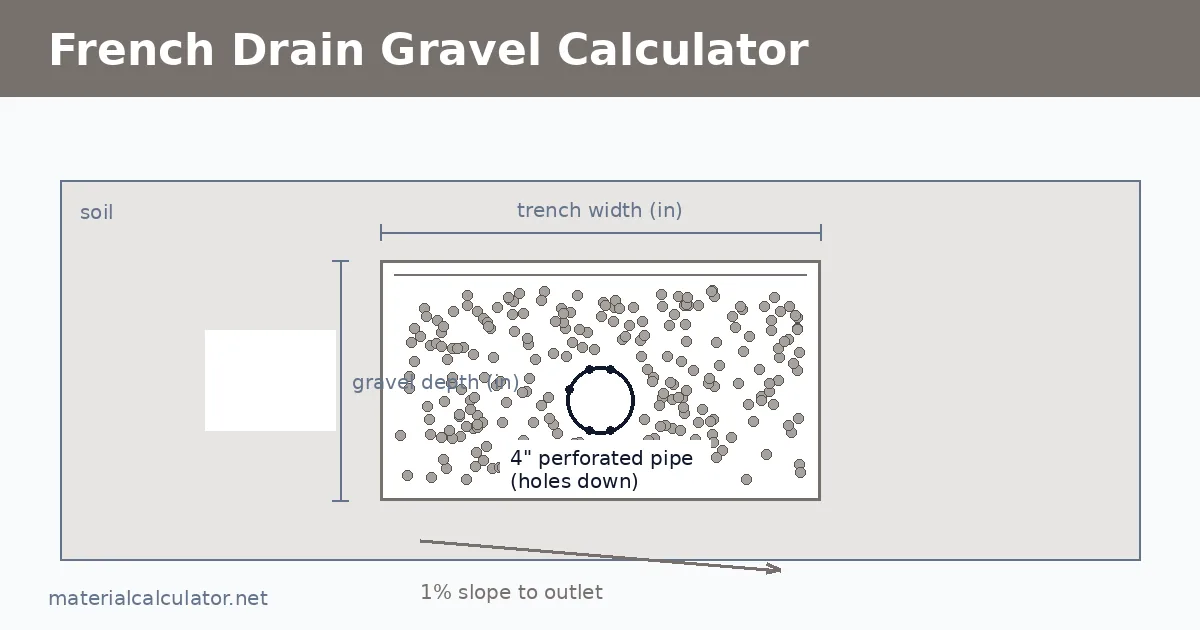
Trench geometry follows a few fixed rules. Width runs 9 to 12 inches for a standard 4-inch perforated pipe: enough room for gravel on both sides of the pipe, narrow enough to dig by hand with a trenching shovel. Depth is 18 to 24 inches for yard drainage and down to footing level for foundation drains. The pipe bed gets 2-3 inches of compacted gravel, then the pipe itself, then 6-12 inches of cover stone above it before soil goes back. The critical number is slope: a 1% grade, which is 1/8 inch of fall per foot of trench. Flatter than that and water sits instead of flowing, letting sediment settle in the pipe; steeper is fine but rarely achievable across a flat yard. Check slope with a 4-foot level and a tape as you dig, not after the gravel is in.
Assembly order matters once the gravel math is done. Line the trench with non-woven geotextile fabric first, leaving enough extra to fold over the top burrito-style with a 12-inch overlap. Place the bedding gravel and compact it lightly, set the perforated pipe with the holes facing down (water rises into the pipe from below through the stone bed; holes-up lets silt wash straight in), and recheck slope. Fill with washed stone to about 6 inches below finished grade (the depth your French drain gravel calculator used for its volume), fold the fabric over the stone, then top with soil and sod or a shallow decorative gravel strip. Every fabric penetration, including where downspouts tie into the system, gets overlapped or sealed: one unprotected joint lets in enough silt to start the clogging process.
Order gravel by the ton for any trench over about 30 feet: bulk delivery at $40 to $65 per ton beats retail bags by a factor of three once you pass two tons. Bags make sense only for short repairs under 20 feet, where a half-cubic-foot bag at $4 to $6 each is cheaper than a quarry delivery fee. Quarries sell by the ton with a 2 to 3-ton minimum for delivery, so combine the drain stone with any other aggregate your project needs. Run the final trench numbers through a French drain gravel calculator, then add an extra half-ton to the order: running short mid-trench leaves pipe sitting exposed while you wait on a second truck, and the delivery fee on a small second load wipes out any savings from ordering tight.
Use washed 3/4-inch stone (#57) and nothing else. Pea gravel migrates and clogs, crusher run compacts and blocks flow, and round river rock nests too tightly. Washed angular stone leaves about 40% void space for water to move through.
Wrap the entire trench in non-woven geotextile fabric, burrito-style, with a 12-inch overlap at the top. Silt infiltration is what kills French drains, and fabric is the difference between a 5-year drain and a 25-year drain.
Lay the perforated pipe with the holes facing DOWN. This surprises most DIYers, but water rises into the pipe from below through the gravel bed; holes-up lets silt wash straight into the pipe.
Give the trench a daylight outlet or a dry well. A French drain with nowhere to discharge is just an underground bathtub: confirm the outlet elevation is below the pipe before you backfill.