Mutterboden vs. Füllerde: Unterschiede, Gewicht und Anwendung
Suchen Sie den richtigen Boden für Ihr Projekt? Erfahren Sie, wann Sie nährstoffreichen Oberboden für den Rasen und wann verdichtbare Füllerde für Fundamente nutzen.

Bauingenieur & Kalkulator
Ingenieur-Zusammenfassung & Kurzantwort
Mutterboden ist die humusreiche Deckschicht für Pflanzen und Rasen. Füllboden ist anorganischer Untergrundboden, der sich fest verdichten lässt und nicht nachsackt – ideal für Fundamente und Gräben.
Wichtige Projekt-Erkenntnisse:
- ✓Mutterboden: Nährstoffreich, sackt nach – nicht unter Fundamente.
- ✓Füllboden: Standfest und verdichtbar für Auffüllungen.
📑 Inhaltsverzeichnis
AEO-Schnellantwort: Beim Vergleich Mutterboden vs. Füllerde ist Mutterboden (Oberboden) die nährstoffreiche obere Bodenschicht (5 bis 20 cm) voller organischer Substanz und Mikroorganismen, was sie ideal für das Wachstum von Rasen, Gärten und Pflanzen macht. Füllerde hingegen ist Unterboden, der unterhalb des Mutterbodens abgetragen wird und Ton, Steine sowie Sand ohne organische Bestandteile enthält. Füllerde wird verwendet, um tiefe Löcher zu füllen, Hänge zu planieren und stabile Fundamente zu bauen, da sie sich fest verdichten lässt, ohne im Laufe der Zeit zu verrotten oder abzusacken.
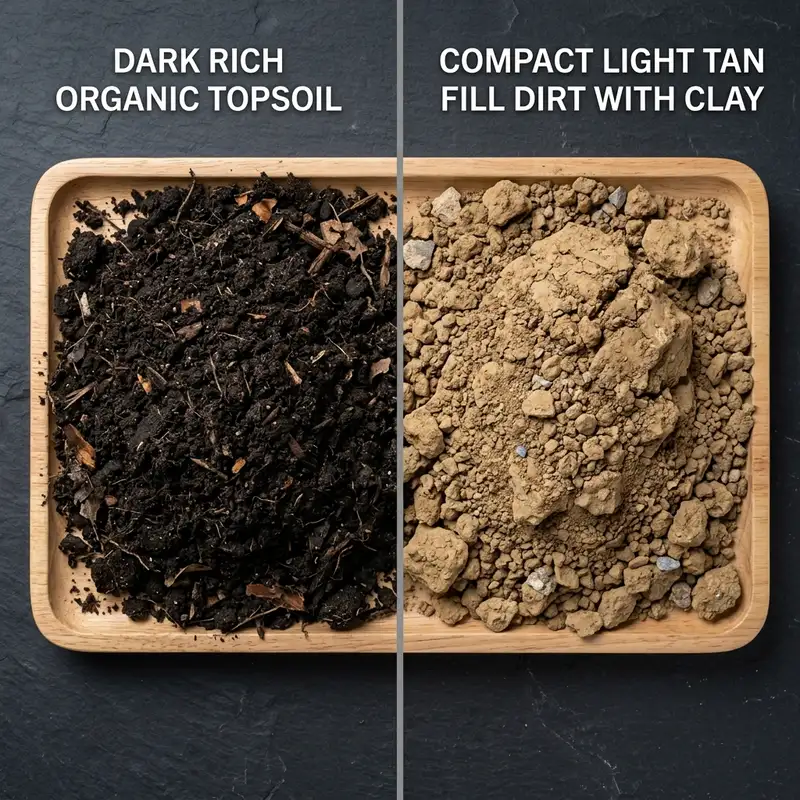
Bei der Planung eines größeren Gartenbauprojekts, einer Rasenerneuerung oder einer Geländenivellierung ist es entscheidend, die Unterschiede zwischen Mutterboden vs. Füllerde zu verstehen, um teure Fehler zu vermeiden.
Die Verwendung von organischem Mutterboden unter einer Beton-Terrassenplatte führt dazu, dass die Platte reißt und absinkt, wenn sich das organische Material zersetzt. Umgekehrt führt das Aussäen von Rasensamen direkt auf dichter Füllerde zu einem kahlen, lückenhaften Rasen, da die Wurzeln weder den verdichteten Lehm durchdringen noch Nährstoffe aufnehmen können.
Dieser umfassende Ratgeber erläutert die chemische Zusammensetzung, Dichte, Gewichtsunterschiede, Kosten pro Kubikmeter und die richtige Schichttechnik für diese beiden unverzichtbaren Materialien.
Strukturelle Unterschiede: Mutterboden vs. Füllerde
Das Verständnis der strukturellen und biologischen Unterschiede zwischen diesen beiden Bodenprofilen ist der Schlüssel zur Auswahl des richtigen Materials für Ihr Bauvorhaben.
| Eigenschaft / Spezifikation | Mutterboden (Oberboden / Organische Schicht) | Füllerde (Unterboden / Mineralische Schicht) |
|---|---|---|
| Herkunft der Bodenschicht | Obere 5 bis 20 cm des Bodens | Unterboden (ab ca. 20 cm Tiefe) |
| Anteil organischer Substanz | Hoch (2 % bis über 10 % Humus & Kompost) | Keine (0 % organischer Anteil) |
| Verdichtbarkeit | Gering (bleibt locker und porös) | Hoch (lässt sich ohne Lufteinschlüsse fest verdichten) |
| Zersetzung & Setzung | Setzt sich stark ab, wenn organisches Material verrottet | Zersetzt sich nicht; bleibt strukturell stabil |
| Hauptanwendungsbereiche | Rasenaussaat, Gartenbeete, Topdressing | Auffüllen tiefer Löcher, Fundamentpolster, Geländenivellierung |
| Durchschnittliches Gewicht pro m³ | Ca. 1,2 bis 1,3 Tonnen (trocken/feucht) | Ca. 1,4 bis 1,6 Tonnen (verdichtet) |
| Durchschnittliche Kosten pro m³ | 35 € bis 60 € pro Kubikmeter | 15 € bis 30 € pro Kubikmeter |
Was ist Mutterboden?
Mutterboden (auch Oberboden genannt) ist die oberste Schicht der Erdoberfläche. Er entsteht über Jahrhunderte hinweg durch den natürlichen Abbau von Blättern, Holz, Pflanzen und organischen Stoffen.
Eigenschaften von hochwertigem Mutterboden
- Nährstoffreich: Enthält essenzielle Makronährstoffe (Stickstoff, Phosphor, Kalium) und Mikronährstoffe, die für das Pflanzenwachstum lebenswichtig sind.
- Biologische Aktivität: Voller nützlicher Bodenmikroben, Mykorrhizapilze und Regenwürmer, die den Boden auf natürliche Weise belüften.
- Feuchtigkeitsspeicherung: Die mikroporöse Struktur speichert Feuchtigkeit, lässt überschüssiges Wasser jedoch zuverlässig von den Pflanzenwurzeln abfließen.
- Gesiebter vs. ungesiebter Mutterboden: Hochwertiger Mutterboden aus dem Fachhandel wird durch Siebe (Maschenweite ca. 10 bis 15 mm) gesiebt, um Steine, Äste, Wurzeln und harte Lehmklumpen zu entfernen. Ungesiebter Boden ist Rohboden direkt vom Aushub und enthält oft grobe Rückstände.
Beste Einsatzzwecke für Mutterboden
- Rasen Neuanlage & Aussaat: Aufbringen einer 5 bis 10 cm dicken Schicht aus gesiebtem Oberboden vor dem Verlegen von Rollrasen oder dem Säen von Rasensamen.
- Topdressing bestehender Rasenflächen: Aufbringen einer dünnen Schicht (ca. 1 cm) auf etabliertem Rasen, um kleine Unebenheiten auszugleichen und den Boden zu nähren.
- Garten- & Blumenbeete: Mischen von Oberboden mit Kompost, um Hochbeete anzulegen oder ausgelaugte Böden aufzubessern.
- Pflanzen von Bäumen & Sträuchern: Verfüllen des Pflanzlochs um den Wurzelballen mit einer Mischung aus Mutterboden und Kompost.
Was ist Füllerde?
Füllerde (oft auch als Füllboden oder ungesiebter Aushub bezeichnet) ist Unterbodenmaterial, das unterhalb der organischen Mutterbodenschicht abgetragen wird. Sie besteht hauptsächlich aus anorganischen Mineralien: Sand, Schluff, Kies und Ton.
Eigenschaften von Füllerde
- Keine organischen Bestandteile: Saubere Füllerde enthält keine Wurzeln, Blätter oder verrottenden Stoffe. Dies ist eine zwingende Voraussetzung für die bauliche Stabilität.
- Hoher Ton- & Mineralgehalt: Tonpartikel verbinden sich unter Druck fest miteinander und verdrängen Lufteinschlüsse.
- Strukturelle Stabilität: Da sie keine organischen Stoffe enthält, verrottet, schrumpft oder sackt Füllerde nach fachgerechter Verdichtung mit einer Rüttelplatte oder Walze nicht ab.
- Zertifizierter Füllboden vs. ungesiebter Aushub: Zertifizierter, sauberer Füllboden ist nachweislich frei von Schadstoffen, Bauschutt, Betonstücken und großen Felsbrocken.
Beste Einsatzzwecke für Füllerde
- Unterbau für Bauwerke: Erstellen eines ebenen Untergrunds vor dem Gießen von Betoneinfahrten, Garagenböden oder Terrassenplatten.
- Verfüllen tiefer Löcher & Gräben: Auffüllen von Gruben, die tiefer als 15 cm sind, da die Verwendung von teurem Mutterboden hier unwirtschaftlich und instabil wäre.
- Geländemodellierung & Entwässerung: Gestaltung des Gefälles im Garten, um Regenwasser gezielt vom Hausfundament wegzuleiten.
- Hinterfüllung von Stützmauern: Auffüllen des Bereichs hinter Stützmauern aus Betonsteinen, um dem Erddruck standzuhalten.
Warum Sie Boden richtig schichten müssen (Die 2-Schritt-Methode)
Wenn Sie eine tiefe Senke oder ein Loch in Ihrem Garten haben (tiefer als 10 bis 15 cm), füllen Sie das Loch niemals vollständig mit Mutterboden auf.
Da sich Mutterboden zersetzt und unter Regenbelastung setzt, wird ein 30 cm tiefes Loch, das rein mit Oberboden gefüllt ist, innerhalb eines Jahres um 5 bis 8 cm absacken – die Senke entsteht von Neuem.
Der korrekte Schichtaufbau:
- Tragschicht (Füllerde): Füllen Sie den unteren Teil der Grube mit sauberer Füllerde auf, bis etwa 8 bis 10 cm unter der endgültigen Rasenhöhe verbleiben. Verdichten Sie die Füllerde in Schichten von jeweils ca. 5 cm mit einem Handstampfer oder einer mechanischen Rüttelplatte.
- Deckschicht (Mutterboden): Tragen Sie die letzten 8 bis 10 cm hochwertigen, gesiebten Mutterboden direkt auf die verdichtete Füllerde auf. Ziehen Sie die Fläche glatt und säen Sie Ihren Rasen aus oder verlegen Sie Rollrasen.
Dieses zweistufige Verfahren garantiert ein absolut stabiles Fundament, das nicht absackt, und bietet gleichzeitig die oberen 10 cm des fruchtbaren Bodens, die Rasenwurzeln zum Gedeihen benötigen.
Gewichts- & Dichteunterschiede im Vergleich
Wenn Sie Erde selbst transportieren, ist das Gewicht ein entscheidender Sicherheitsfaktor. Füllerde ist aufgrund ihres hohen Ton- und Mineralgehalts dichter und erheblich schwerer als Mutterboden.
- 1 Kubikmeter (m³) trockener Mutterboden: ca. 1,2 bis 1,3 Tonnen
- 1 Kubikmeter (m³) feuchter Mutterboden: ca. 1,4 Tonnen
- 1 Kubikmeter (m³) verdichtete Füllerde: ca. 1,5 bis 1,7 Tonnen
- 1 Kubikmeter (m³) nasser, schwerer Lehm-Füllboden: bis zu 1,9 Tonnen
💡 Profi-Tipp: Prüfen Sie immer die Nutzlast Ihres Fahrzeugs oder Anhängers. Ein normaler PKW-Anhänger ist oft schon mit einem halben Kubikmeter feuchtem Mutterboden überladen, ganz zu schweigen von schwerer, nasser Füllerde.
Häufig gestellte Fragen
Kann man Rasen direkt auf Füllerde säen?
Nein. Rasensamen keimen auf roher Füllerde nur sehr schwer, da ihr organische Nährstoffe fehlen und sie für feine Wurzeln zu dicht ist. Decken Sie Füllerde vor der Aussaat immer mit mindestens 8 bis 10 cm hochwertigem Mutterboden ab.
Ist pulverisierter Mutterboden besser als gesiebter Mutterboden?
Pulverisierter Mutterboden ist gesiebter Oberboden, der zusätzlich durch Hammermühlen zerkleinert wurde, um alle Lehmklumpen in eine feine, pulverartige Konsistenz zu bringen. Er eignet sich hervorragend für die Rasennivellierung und die Vorbereitung eines perfekt ebenen Saatbetts.
Wie viel kostet eine Lieferung Mutterboden oder Füllerde?
Füllerde kostet in der Regel zwischen 15 € und 30 € pro Kubikmeter (zzgl. Liefergebühren). Gesiebter Mutterboden liegt bei etwa 35 € bis 60 € pro Kubikmeter. Die Lieferkosten für Schüttgut variieren je nach Entfernung zum Kieswerk oder Baustoffhändler meist zwischen 80 € und 180 €.
Berechnen Sie Ihre genaue Bodenmenge sofort
Zahlen Sie niemals zu viel für Schüttgut-Lieferungen. Nutzen Sie unseren kostenlosen Mutterboden-Rechner und Füllerde-Rechner, um Ihre Projektmaße einzugeben und sofort die benötigten Kubikmeter, das Gewicht in Tonnen sowie die geschätzte Anzahl der LKW-Ladungen zu berechnen.
Weitere Leitfäden: Landscaping
Alle Leitfäden ansehen →Langlebigen Unterbau für Kieseinfahrt bauen: Splitt vs. Schottertragschicht
Erfahren Sie, wie Sie ein stabiles Fundament für Ihre Kiesauffahrt bauen. Splitt vs. Schottertragschicht im Vergleich, Verdichtungstipps & Materialrechner.
Materialberechnungsstandards & Methodik: Die Ingenieurwissenschaft hinter der Plattform
Entdecken Sie die präzisen mathematischen Formeln, Schüttdichtematrizen und geotechnischen Richtlinien, die unseren Tiefbau-Rechnern zugrunde liegen.
Wie viele Säcke Mutterboden für ein 4x8 Hochbeet benötigen Sie? (Genaue Berechnung & Erdmischung)
Wie viele Säcke Erde brauchen Sie für ein 4x8 Hochbeet? Erhalten Sie die exakte Berechnung, das perfekte 60-30-10-Mischungsverhältnis und Profi-Tipps vom Bauingenieur.