Calculate Your Project
Project Diagram
Total Volume
—Cubic Yards
Enter dimensions above
Estimated Weight
—Tons
Based on Sand density (1.3 t/yd³)
Whether you are setting a paver patio, filling a sandbox, or mixing concrete, enter your project dimensions for the exact amount of sand to order.
Total Volume
Enter dimensions above
Estimated Weight
Based on Sand density (1.3 t/yd³)
| Measurement System | Total Volume | Estimated Weight |
|---|---|---|
| Imperial (US) | 1 Cubic Yards | 1.3 Tons (2,600 lbs) |
| Metric (EU) | 1 m³ | 1.70 Tonnes (1,700 kg) |
* Note: Exact weight can vary based on moisture content and compaction.
| Project / Use Case | Recommended Depth |
|---|---|
| Paver / Brick Leveling Base | 1 inch (exact) |
| Sandbox Fill | 12–18 inches |
| Above-Ground Pool Base | 2 inches |
| Concrete Mix (volumetric) | See mix ratios below |
Most landscaping suppliers sell sand by the cubic yard. To convert your project area to cubic yards, use this formula:
Our calculator also multiplies your cubic yard result by 1.3 tons/yd³ (the standard density for sand) to show estimated weight — essential if you are hauling the material yourself or need delivery pricing.
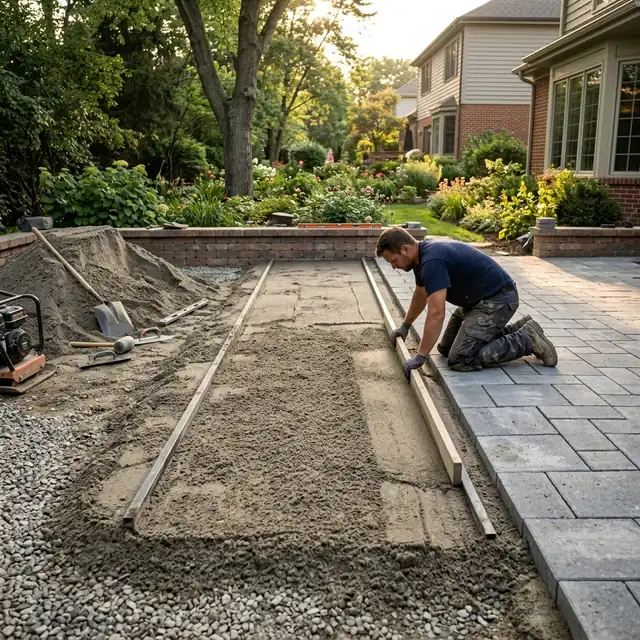
For paver setting, always use coarse concrete sand (also called sharp sand), not fine play sand. Play sand compresses and causes pavers to sink.
Never exceed 1 inch of leveling sand under pavers. Thicker beds cause pavers to rock and crack over time.
For sandboxes, choose washed play sand. It is non-toxic, has no sharp particles, and drains quickly.