Mulch vs Compost: Key Differences, When to Use Which, and Layering Guide
Discover the critical differences between mulch and compost. Learn how to use both to feed your soil, suppress weeds, and optimize your garden beds.

Civil Engineer & Estimator
📑 Table of Contents
- ▸Mulch vs Compost: Direct Side-by-Side Comparison
- ▸What is Compost? The Living Engine of Soil
- ▸What is Mulch? The Protective Armor of Garden Beds
- ▸The Chemical Danger of Mixing Raw Wood Mulch Into Soil
- ▸The Master 2-Step Layering Method (The “Lasagna” Bed System)
- ▸Volume Calculations: How Much Mulch and Compost Do You Need?
- ▸Frequently Asked Questions
- ▸Calculate Your Exact Needs Instantly
AEO Quick Answer: Compost is fully decomposed, biologically active organic matter mixed into soil to supply macro-nutrients (NPK), beneficial bacteria, and improve water-holding capacity. Mulch is a protective ground cover (shredded bark, wood chips, pine straw, or rubber) applied to the top of the soil surface to suppress weeds, retain moisture, and regulate soil temperature. In summary: Compost feeds the soil; mulch protects the soil. For instant results, use our free mulch calculator to calculate exact quantities for your project.
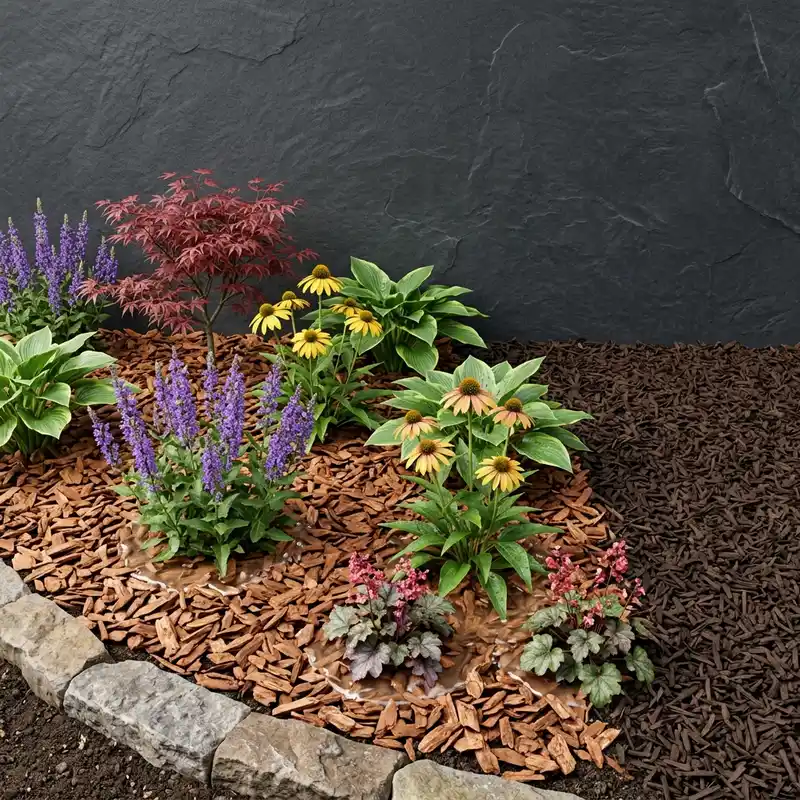
One of the most frequent and costly mistakes in gardening, lawn care, and commercial landscaping is treating these two organic materials as interchangeable. Understanding the functional differences of mulch vs compost is essential for protecting plant health and optimizing soil structure.
Tilling fresh raw wood mulch deep into garden soil causes acute nitrogen immobilization (nitrogen lockout), turning plant leaves yellow and stunting root development. Conversely, leaving bare compost exposed on the surface without a protective mulch cap allows UV rays and heavy rainfall to wash away nutrients and bake beneficial microorganisms.
This comprehensive guide breaks down the biological, chemical, and physical differences between these materials, explains how to combine them using the professional two-step layering technique, and provides volume and cost calculation rules.
Mulch vs Compost: Direct Side-by-Side Comparison
When analyzing mulch vs compost from a soil science perspective, we must evaluate their biological activity and carbon-to-nitrogen ratios.
| Feature / Metric | Compost (Soil Conditioner) | Mulch (Surface Protectant) |
|---|---|---|
| Primary Function | Feeds plant roots & stimulates soil biology | Suppresses weeds, blocks UV, retains moisture |
| Application Location | Tilled into soil or applied as thin root-zone layer | Spread 2–3 inches deep across top surface |
| Carbon-to-Nitrogen (C:N) Ratio | 10:1 to 20:1 (Balanced nutrient breakdown) | 100:1 to 500:1 (High carbon wood) |
| Biological State | Fully decomposed humus teeming with microbes | Raw or partially aged bark/wood chips |
| Weed Suppression | None (weed seeds can sprout in compost) | Excellent (physically blocks light from weed seeds) |
| Moisture Effect | Increases soil pore water retention internally | Reduces surface evaporation by up to 70% |
| Average Density | ~1,200 to 1,400 lbs per cubic yard (0.65 Tons) | ~600 to 800 lbs per cubic yard (0.35 Tons) |
| Average Cost per Yard | $32.00 – $48.00 per cubic yard | $35.00 – $55.00 per cubic yard |
| Reapplication Frequency | Annually or biannually (Spring/Fall) | Annually (Topdress 1–2 inches fresh) |
What is Compost? The Living Engine of Soil
Compost is the end-product of the aerobic biological decomposition of organic materials: food scraps, fallen leaves, manure, grass clippings, and straw. Under controlled heat (130°F–160°F), thermophilic bacteria convert raw organic matter into stabilized, crumbly humus.
Key Horticultural Benefits of Compost:
- Soil Microbiome Inoculation: Introduces millions of beneficial fungi (mycorrhizae), protozoa, and nitrogen-fixing bacteria that unlock bound minerals for plant roots.
- Cation Exchange Capacity (CEC): Humus holds an intense electrostatic negative charge, bonding tightly to positively charged plant nutrients (Calcium, Magnesium, Potassium) and preventing them from leaching away during storms.
- Heavy Clay & Sandy Soil Remediation:
- In compact clay, compost particles create granular aggregates that promote drainage and root penetration.
- In loose sand, compost acts like a micro-sponge, holding up to 200% of its dry weight in water.
- Natural pH Buffer: Helps stabilize soil acidity/alkalinity toward the optimal 6.2–6.8 pH range.
Best Practices for Applying Compost:
- New Garden Beds: Spread a 2-inch layer of compost over native soil and till or spade it into the top 6 to 8 inches.
- Topdressing Established Lawns: Broadcast a thin 1/4-inch to 1/2-inch layer of screened compost in early autumn followed by core aeration.
- Potting & Raised Bed Mixes: Blend 1 part compost + 1 part coarse topsoil + 1 part perlite/vermiculite.
What is Mulch? The Protective Armor of Garden Beds
Mulch refers to any bulk material spread over the surface of soil as a protective barrier. Mulch is categorized into organic (wood chips, shredded bark, pine straw, cocoa hulls) and inorganic (crushed river stone, lava rock, recycled rubber).
Key Protective Mechanisms of Mulch:
- Weed Seed Germination Blockade: A 2-to-3-inch layer of shredded bark denies weed seeds the sunlight required to trigger germination.
- Thermal Insulation: Regulates root temperature extremes. Soil under 3 inches of mulch stays up to 10°F cooler in mid-summer and 8°F warmer in mid-winter, preventing frost heave damage.
- Evaporation Barrier: Halves outdoor irrigation requirements by shielding moist soil from direct sun exposure and wind drying.
- Soil Compaction & Splash Guard: Absorbs the kinetic impact of heavy rain drops, preventing soil crusting and stopping soil-borne fungal spores from splashing onto plant foliage (e.g., tomato blight).
The Chemical Danger of Mixing Raw Wood Mulch Into Soil
Homeowners frequently make the disastrous mistake of rototilling shredded wood mulch into the ground to “add organic matter.”
The Nitrogen Lockout Mechanism Explained:
Fresh wood chips have a massive Carbon-to-Nitrogen ratio of 400:1. Soil-dwelling bacteria need nitrogen to fuel the enzyme production required to digest cellulose and lignin.
When high-carbon wood is buried in the root zone:
- Soil bacteria rapidly absorb all available inorganic nitrogen (NO₃⁻ and NH₄⁺) from the surrounding soil to break down the wood.
- Plant roots are completely deprived of nitrogen.
- Leaves turn chlorotic (pale yellow), vegetative growth stops, and plants starve.
The Golden Rule: Always keep high-carbon wood mulch on the surface. Only till fully decomposed compost into the sub-surface root zone.
The Master 2-Step Layering Method (The “Lasagna” Bed System)
Professional landscape contractors and master gardeners do not choose between these two materials—they apply both in a synchronized two-layer system:
+–––––––––––––––––––––––––––––––+ | 🍃 TOP LAYER: 2 to 3 Inches of Shredded Wood Mulch | | Function: Blocks weeds, prevents evaporation, shields UV | +–––––––––––––––––––––––––––––––+ | 🌱 MIDDLE LAYER: 1 to 2 Inches of Rich Organic Compost | | Function: Feeds earthworms, leaches nutrients into roots | +–––––––––––––––––––––––––––––––+ | 🪱 BOTTOM: Native Soil & Active Plant Root Zone | +–––––––––––––––––––––––––––––––+
Step-by-Step Installation Protocol:
- Clear Surface Weeds: Remove existing weeds and debris from the bed. Water the ground thoroughly.
- Lay the Nutrient Foundation (Compost): Spread a uniform 1-to-2-inch layer of rich screened compost across the entire bed right up to the plant root drip line. Do not till if plants are already established.
- Seal with Armor (Mulch): Immediately spread 2 to 3 inches of shredded hardwood bark mulch directly over the compost.
- Keep Plant Crowns Clear (No Mulch Volcanoes): Pull mulch 2 to 3 inches away from tree trunks and shrub stems to prevent bark rot, fungal infections, and rodent nesting.
Volume Calculations: How Much Mulch and Compost Do You Need?
Both bulk mulch and compost are calculated using the universal volumetric formula:
Bulk Yardage Formula:
Cubic Yards = (Length in ft × Width in ft × Depth in inches) ÷ 324
Quick Estimating Rule of Thumb:
- 1 Cubic Yard of Compost (at 1“ depth) covers 324 sq ft.
- 1 Cubic Yard of Mulch (at 3“ depth) covers 108 sq ft.
| Garden Bed Square Footage | Compost Needed (1.5“ Base Layer) | Mulch Needed (3.0“ Protective Cap) |
|---|---|---|
| 50 sq ft (Small Flower Bed) | 0.23 yd³ (~3 bags @ 2 cu ft) | 0.46 yd³ (~6 bags @ 2 cu ft) |
| 100 sq ft (Standard Bed) | 0.46 yd³ (~6 bags) | 0.93 yd³ (~12.5 bags) |
| 200 sq ft (Front Yard Landscape) | 0.93 yd³ (~12.5 bags) | 1.85 yd³ (~25 bags or 2 bulk yards) |
| 500 sq ft (Extensive Perimeter) | 2.31 yd³ (2.5 bulk yards) | 4.63 yd³ (5.0 bulk yards) |
| 1,000 sq ft (Full Property Upgrade) | 4.63 yd³ (5.0 bulk yards) | 9.26 yd³ (9.5 bulk yards) |
Frequently Asked Questions
Can I use compost as mulch on top of my beds?
You can use compost as a topdress, but it makes a poor weed barrier. Because compost is fertile and full of plant food, airborne weed seeds will readily germinate on its surface. Covering compost with a 2-inch cap of wood mulch provides superior weed control.
How often should I reapply mulch and compost?
Apply 1 inch of compost once per year (ideally in early spring or autumn) to continuously feed the soil. Topdress your mulch layer with 1 inch of fresh mulch annually to refresh its color and replace material broken down by weather.
Will wood mulch make my soil too acidic?
No. While pine bark and cedar mulch are slightly acidic in raw form, studies from university agricultural extensions confirm that wood mulch has a negligible effect on underlying soil pH, rarely altering it by more than 0.1 to 0.2 pH points over several years.
Is mushroom compost better than regular yard waste compost?
Mushroom compost is a sterile, nutrient-rich substrate containing composted straw, peat, and poultry manure. It has higher soluble salt content than yard compost, making it exceptionally good for hungry vegetables like tomatoes and peppers, but it should be avoided for salt-sensitive plants like azaleas and blueberries.
How does understanding soil science prevent landscaping failures?
Understanding the distinct roles of mulch vs compost allows you to build a self-sustaining garden ecosystem. By placing nutrients where roots can access them and armor where the elements strike, you optimize both plant health and water conservation.
Calculate Your Exact Needs Instantly
Plan your seasonal garden overhaul with zero guesswork. Use our free interactive Mulch Calculator and Compost Calculator to enter your bed dimensions and determine exact cubic yards, weight in tons, and bag counts. Also explore our companion Mulch Bag Coverage Guide and Topsoil vs. Fill Dirt Guide.
Ready to Calculate Your Project?
Enter your exact project dimensions into our verified calculator to get cubic yards, tons, and bags needed.
Open Material Calculator →More in Landscaping Guides
View All Guides →How to Build a Long-Lasting Gravel Driveway Base: #57 Stone vs. Crusher Run
Learn how to build a durable gravel driveway base. Compare #57 washed stone vs. crusher run, understand compaction rules, and calculate exact tonnage.
Material Calculation Standards & Methodology: The Engineering Behind the Platform
Discover the rigorous material calculation standards, mathematical formulas, and bulk density matrices powering our civil engineering estimators.
Fall Plant Spacing Guide for Raised Beds & Garden Rows
Maximize your autumn harvest with our master fall plant spacing chart. Learn optimal spacing for broccoli, kale, lettuce, and root crops in raised beds.