Calculez votre projet
Fence Posts
—posts
Entrez les dimensions ci-dessus
Pickets Needed
—pickets
Posts, pickets, rails and concrete estimate
Enter your fence length and the fence calculator estimates posts, pickets, rails, and concrete bags, with a 2026 cost breakdown for the whole run.
Fence Posts
Entrez les dimensions ci-dessus
Pickets Needed
Posts, pickets, rails and concrete estimate
| 50 ft fence | 8 posts, 110 pickets, 16 rails |
| 100 ft fence | 14 posts, 219 pickets, 28 rails |
| 150 ft fence | 20 posts, 328 pickets, 40 rails |
| 200 ft fence | 26 posts, 437 pickets, 52 rails |
| Pressure-treated 4x4x8 post | $12 - $18 |
| Cedar or PT 5.5 in picket (6 ft) | $3 - $6 |
| Pressure-treated 2x4x8 rail | $8 - $12 |
| 80-lb bag of concrete mix | $6 - $8 |
Prices are 2026 US averages. Actual costs vary by region and supplier.
| Projet / Utilisation | Profondeur recommandée |
|---|---|
| Standard post spacing | 8 ft on center |
| High-wind or tall fences (7-8 ft) | 6 ft on center |
| Post hole depth | 1/3 of above-ground height |
| Standard picket width | 5.5 in (nominal 1x6) |
La plupart des fournisseurs vendent le fence à la verge cube. Pour convertir la surface en verges cubes, utilisez cette formule :
Notre calculatrice multiplie également le résultat par 0 tonnes/vg³ (densité standard) pour estimer le poids.
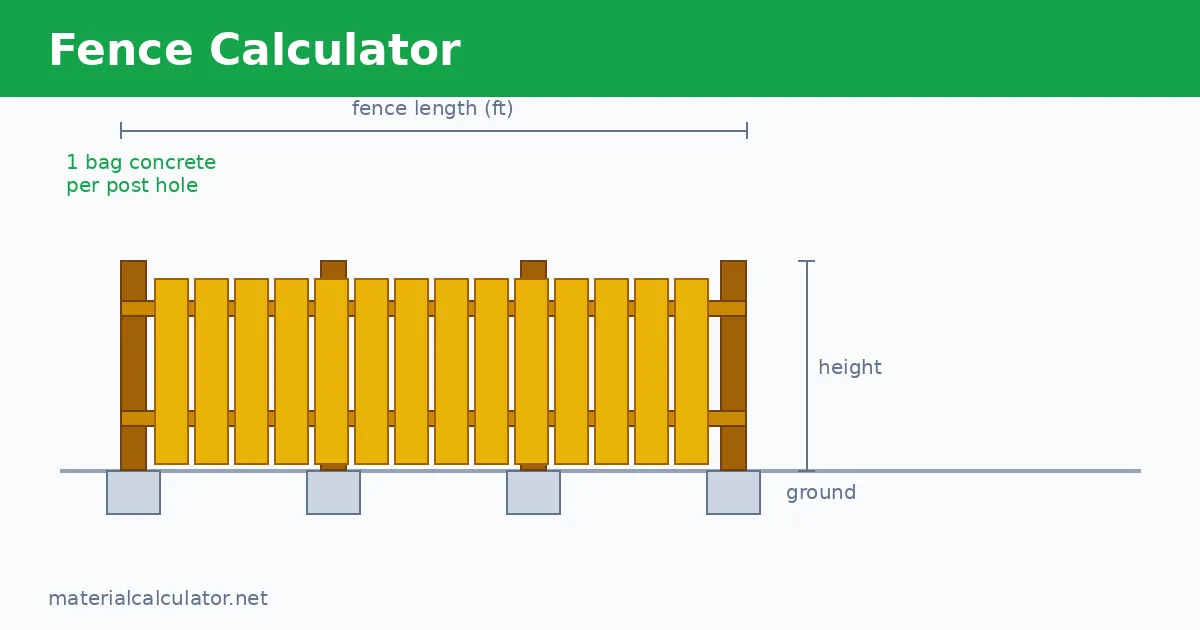
A fence calculator turns your fence length into a complete shopping list: posts, pickets, rails, and concrete bags. The post formula is (Fence Length / Post Spacing) + 1 + Gates. For a 100-foot run at 8-foot spacing with one gate: 100 / 8 = 12.5, rounded up to 13 intervals, plus 1 end post, plus 1 gate post = 15 posts. Pickets follow a separate rule: (Length x 12) / 5.5 for standard 5.5-inch pickets, which gives 219 pickets for that same 100-foot run before waste. Because posts, pickets, and rails all derive from the same length input, the three counts stay consistent, which matters when lumber is sold in bundles and a miscount means a second trip.
Post spacing is the decision that drives everything else. Eight feet is the residential standard because rails are sold in 8-foot lengths, so each rail spans exactly from post to post with zero cutting and zero waste. Step down to 6-foot spacing for fences 7 feet and taller, for board-on-board designs that catch more wind, and for any run with a wide gate, since the extra posts resist racking and leaning over the seasons. Corner posts and gate posts always get deeper holes and extra concrete because they carry the tension of the entire line. On sloped ground, step the fence in full 8-foot sections instead of racking the pickets: stepped fences keep every picket vertical and every rail level, which looks sharper and sheds water better. Running both spacings through a fence calculator before you buy takes a minute and settles the cost difference immediately.
Picket math depends on the actual width of your pickets, not the nominal size stamped on the tag. A nominal 1x6 picket measures 5.5 inches wide, so 12 / 5.5 = 2.18 pickets per linear foot when butted tight with no gaps. Shadowbox and board-on-board styles use roughly double that because pickets go on both faces of the rails. Always add 5% waste for miscuts and rejected boards, and buy all pickets from the same lumber unit so the color weathers evenly across the run. For a 150-foot run that means 328 pickets before waste, so order 345. If prebuilt 8-foot panels appeal to you, the count is simply Length / 8, but panels lock your post spacing and waste more material on slopes, which is one more comparison a fence calculator handles before you commit.
Rails are the horizontal members the pickets nail to: two rails per section for fences up to 6 feet tall, three rails for 7 to 8-foot fences where the extra rail stops tall pickets from bowing. Standard 2x4x8 rails sit flat between posts, and the count is simply two per post interval, so a 14-post run needs 28 rails. Concrete is simpler still: one 80-lb bag per 4x4 post hole at 2 feet deep is the planning rule, with gate and corner posts getting two bags each. Set 6 inches of gravel in the bottom of every hole before the post goes in; it drains water away from the end grain, which is exactly where rot starts. In sandy or loose soil, widen holes to 12 inches and add a second bag per post: the wider concrete footing resists uplift in high wind. Gate posts deserve special attention in any fence plan: use 6x6 posts and double the concrete for gates wider than 4 feet.
Budget the project with 2026 numbers before you buy. DIY materials for a 100-foot cedar privacy fence run $1,500 to $2,500: roughly $200 for posts, $900 for pickets, $250 for rails, and $150 for concrete and fasteners. Professional installation for the same run costs $3,000 to $6,000 depending on terrain, access, and region. Pressure-treated pine is the budget pick at roughly half the price of cedar, though cedar needs no stain and weathers to an even silver gray that many homeowners prefer. Run your measurements through a fence calculator first, then buy everything in one trip: a second lumber run usually means a second delivery fee or a second afternoon lost, and most yards quote their best price per bundle.
Set corner posts and gate posts first, then run a string line between them. Every line post goes to the string, which keeps the fence arrow-straight without re-measuring each hole.
Buy 10% more pickets than the fence calculator outputs. Pickets vary in color and grain, and you will reject some for warping or knots. Sorting lets you put the best faces outward.
Slope the concrete at the base of each post so water sheds away from the wood. A flat or dished concrete cap traps water against the post and rots it years early.
Call 811 before you dig. Utility locates are free in the US, and hitting a gas or fiber line turns a weekend fence project into a five-figure emergency.