Calculez votre projet
Board Feet
—BF
Entrez les dimensions ci-dessus
Per Board
—BF
(T x W x L) / 12 per board, nominal sizes
Enter thickness, width, length, and quantity, and the board foot calculator returns exact board feet for pricing any lumber project.
Board Feet
Entrez les dimensions ci-dessus
Per Board
(T x W x L) / 12 per board, nominal sizes
| 2x4 x 8 ft | 5.33 board feet |
| 2x6 x 10 ft | 10 board feet |
| 1x8 x 12 ft | 8 board feet |
| 4x4 x 8 ft (post) | 10.67 board feet |
| Pine / fir framing lumber | $1.50 - $3.00 |
| Pressure-treated pine | $2.00 - $4.00 |
| Cedar / redwood | $3.00 - $8.00 |
| Oak / walnut hardwood | $5.00 - $15.00 |
Prices are 2026 US averages. Actual costs vary by region and supplier.
| Projet / Utilisation | Profondeur recommandée |
|---|---|
| 1 board foot equals | 144 cu in (1 in x 12 in x 12 in) |
| 2x4 actual dimensions | 1.5 in x 3.5 in (use nominal) |
| 2x6 actual dimensions | 1.5 in x 5.5 in (use nominal) |
| Hardwood lumber | Priced per board foot |
La plupart des fournisseurs vendent le board foot à la verge cube. Pour convertir la surface en verges cubes, utilisez cette formule :
Notre calculatrice multiplie également le résultat par 0 tonnes/vg³ (densité standard) pour estimer le poids.
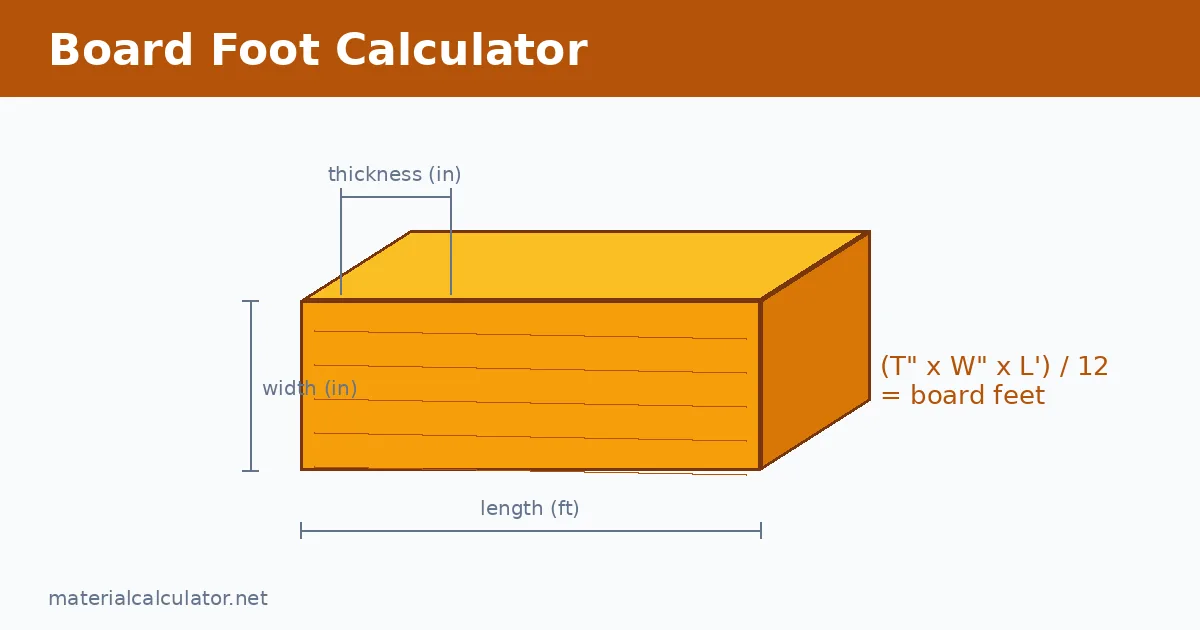
A board foot calculator converts lumber dimensions into board feet, the unit the entire wood trade uses to price and compare boards. One board foot equals 144 cubic inches: a board 1 inch thick, 12 inches wide, and 12 inches long. The formula is (Thickness in inches x Width in inches x Length in feet) / 12, multiplied by quantity. A 2x6 that is 10 feet long: (2 x 6 x 10) / 12 = 10 board feet, and ten of them total 100 board feet. The mixed units look odd at first, but the formula is built that way because lumber is sold by inch dimensions and foot lengths, so the math meets the price tag exactly where it lives.
The most misunderstood part of board feet is nominal versus actual dimensions. Lumber is sold by nominal size (2x4, 2x6, 1x8), but drying and planing shrink every board: a 2x4 actually measures 1.5 x 3.5 inches. Board feet are always calculated with the nominal numbers, and the whole supply chain prices that way, from the mill to the hardwood dealer. Measuring the actual board and plugging in 1.5 x 3.5 undercounts by roughly 30%, which puts your estimate out of step with every quote you receive. The one exception is rough-sawn lumber bought direct from a small mill: confirm whether they tally on nominal or actual before you pay, because small mills vary. When in doubt, run both numbers through a board foot calculator and ask the mill which one matches their tally sheet.
Hardwoods are priced per board foot because they arrive in random widths and lengths straight from the sawmill. A furniture maker buying cherry might receive boards from 4 to 10 inches wide and 8 to 12 feet long; per-piece pricing would be meaningless across that variation, but $9 per board foot makes every board directly comparable. Softwood framing flips the convention: dimensional 2x4s are priced per piece because every one is identical. When a project mixes both, convert everything to board feet first, then multiply by each species rate: that is the estimate format a lumberyard expects, and it is the fastest way to spot which species is driving your budget.
Waste factors differ by material and cutting complexity. Framing lumber with straight crosscuts needs 10% extra; hardwood needs 15% because random-width boards carry wane along the bark edge, knots, and end checks that you cut around, and none of that waste is usable elsewhere. Highly figured or premium-grade lumber can push waste to 20% since you are also cutting around color and grain mismatches for visible parts. Unlike sheet goods, lumber waste cannot be nested efficiently: a cutoff from a 10-foot board rarely matches the next item on the cut list. Price the waste into the job before quoting it, not after the offcut bin fills up. A board foot calculator with a quantity field makes this painless: enter the cut count, read the total, then multiply by 1.15 for hardwood in one step.
Use the board foot total as a buying checklist, not just a number on paper. Sort your cut list by thickness first, because mills price, grade, and stock by thickness, then tally board feet within each thickness. Bring the tally to the yard and have them pull 10-15% more boards than the count suggests so you can reject warped, twisted, or checked pieces on the spot without a second trip. Run the final list through a board foot calculator one more time against the printed quote: species substitutions and unit price changes happen at the counter, and re-verifying the math catches the mis-pulled board before it is strapped to your truck. For repeat projects, save your tally as a template: once the board foot counts are proven on one build, the same cut list prices the next one in minutes, and the calculator becomes your quoting tool rather than just a planning aid.
Always calculate board feet with NOMINAL dimensions (the 2x4 name), never actual milled size. The entire lumber trade prices on nominal, so using actual sizes undercounts by about 30% and your estimate will come in low.
For hardwoods, ask whether the price is per board foot surfaced (S2S) or rough. Surfaced boards lose thickness in planing, and some yards price the rough-sawn board foot while others price what you take home.
Add 15% waste for hardwood projects, not the 10% used for framing. Hardwood boards come in random widths with wane, knots, and checks that you cut around, and the waste lands in the offcut bin.
Compare species on cost per board foot, not per board. A 1x8x10 of oak at $8/BF and a 1x12x8 of the same oak at $8/BF are the same value per volume, even though the price tags look very different.